
Private AP Chemistry Tutoring in Ontario | Grades 11 and 12
Overview of Private AP Chemistry Tutoring in Ontario | Grades 11 and 12
AP Chemistry Tutoring (Grades 11 and 12)
Overview of AP Chemistry Tutoring in Ontario
AP Chemistry Tutoring: Ontario Support for the College Board Exam
AP Chemistry is designed to match a first-year university general chemistry course. Students are expected to move past memorized facts and use particulate-level models, quantitative reasoning and written argument to explain how matter behaves. For families in York Region and across Ontario, AP Chemistry tutoring offers a structured way to close content gaps, build exam technique and protect a competitive average.
Many students feel the jump most in the free-response section. Knowing the content is not enough. Students must justify claims, interpret data, draw particulate diagrams and show every step of a calculation with correct units. Our approach to AP Chemistry tutoring focuses on turning partial understanding into clear, complete, exam-ready answers.
How AP Chemistry Fits with Ontario Chemistry Courses
AP Chemistry is a College Board course, so it does not carry an Ontario Ministry course code. Students usually take it alongside or after Ontario chemistry, and the overlap is significant. Content from Grade 11 Chemistry (SCH3U) such as stoichiometry, bonding and solutions forms the foundation, while Grade 12 Chemistry (SCH4U) topics such as equilibrium, thermodynamics and electrochemistry map closely onto later AP units.
The AP exam goes further in several places. It places heavy weight on intermolecular forces, particulate-level reasoning and experimental design. Students who prepare only from their school course often find gaps in these areas. Students already in the IB stream can also explore our Grade 12 IB Chemistry tutoring page for a comparison of the two pathways.
Understanding the AP Chemistry Exam
The exam lasts 3 hours and 15 minutes and is written in May. Both sections count for 50% of the score, and results are reported on a scale of 1 to 5.
Section I: Multiple Choice. 60 questions in 90 minutes, completed digitally. These test conceptual reasoning, data interpretation and calculation speed.
Section II: Free Response. 7 questions in 105 minutes, written by hand. There are 3 long questions worth 10 points each and 4 short questions worth 4 points each.
Students are given a periodic table and an equation sheet, so success depends on knowing when and how to apply each relationship, not on memorizing them.
The Nine Units of AP Chemistry
The College Board publishes an exam weighting range for each unit. Time spent on higher-weighted units pays off most.
- Unit 1: Atomic Structure and Properties (7 to 9%): Moles, mass spectrometry, electron configuration, photoelectron spectroscopy and periodic trends.
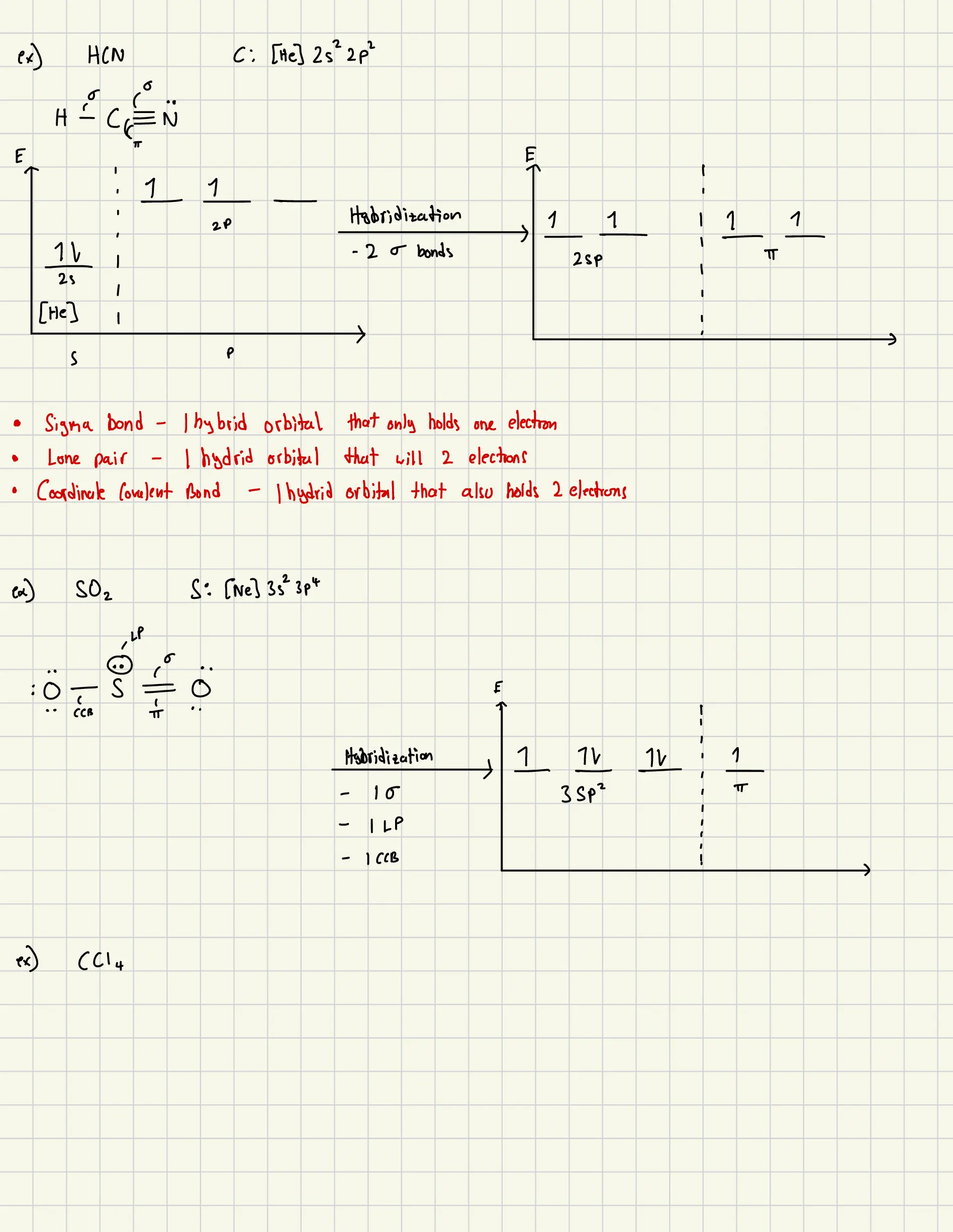
- Unit 2: Compound Structure and Properties (7 to 9%): Ionic, covalent and metallic bonding, Lewis structures, VSEPR and hybridization.
- Unit 3: Properties of Substances and Mixtures (18 to 22%): Intermolecular forces, the gas laws, solutions, spectroscopy and the Beer-Lambert law. This is the most heavily weighted unit.
- Unit 4: Chemical Reactions (7 to 9%): Reaction types, net ionic equations, stoichiometry and titration.
- Unit 5: Kinetics (7 to 9%): Rate laws, integrated rate equations, reaction mechanisms and catalysis.
- Unit 6: Thermodynamics (7 to 9%): Energy diagrams, calorimetry, enthalpy and Hess’s Law.
- Unit 7: Equilibrium (7 to 9%): The equilibrium constant, reaction quotient, Le Chatelier’s principle and solubility.
- Unit 8: Acids and Bases (11 to 15%): pH calculations, weak acid and base equilibria, buffers and titration curves.
- Unit 9: Applications of Thermodynamics (7 to 9%): Entropy, Gibbs free energy, galvanic and electrolytic cells and the link between K, E and ΔG.
Core Skills Students Must Execute
1. Particulate-Level Reasoning
AP Chemistry repeatedly asks students to connect what is happening between particles to what is observed in a lab.
Drawing and interpreting particulate diagrams. Explaining boiling point, solubility and viscosity using intermolecular forces. Linking molecular structure to physical properties.
2. Quantitative Problem Solving
Mathematical routines carry the heaviest weight across both sections of the exam.
Setting up multi-step stoichiometry and limiting reagent problems. Using rate laws, equilibrium expressions and ICE tables. Tracking significant figures and units through every line of a calculation.
3. Equilibrium, Acids and Bases
Together, equilibrium and acid-base chemistry appear on almost every free-response section.
Calculating the pH of strong and weak acids and bases. Analyzing buffer systems and titration curves. Predicting the effect of a stress on a system at equilibrium.
4. Thermodynamics and Electrochemistry
Students must connect energy, spontaneity and cell potential in a single line of reasoning.
Using ΔH, ΔS and ΔG to judge whether a process is favourable. Calculating standard cell potential and relating it to the equilibrium constant. Explaining how temperature changes the direction of spontaneity.
5. Experimental Design and Data Analysis
Long free-response questions often ask students to design an experiment, analyze unfamiliar data or evaluate a procedure.
Identifying variables, controls and sources of error. Interpreting graphs, including linearized rate data. Writing conclusions that are supported by evidence.
Mastering the Free-Response Section
Free-response questions reward structure and precision. A correct answer with weak justification can lose most of its marks, and a partially correct answer with clear reasoning can earn many.
Our tutors help students:
Write Claim, Evidence and Reasoning Responses: Building complete, concise explanations that match what scoring rubrics reward.
Show Complete Work: Presenting equations, substitutions and units in a way that earns every available point.
Practise with Released Questions: Working through past College Board free-response questions with official scoring guidelines, then reviewing each response with a tutor.
Manage Time: Practising the pacing needed to finish seven questions in 105 minutes.
Multiple-Choice Strategy and the Digital Format
Because Section I is completed digitally, students benefit from practising in a format that matches exam day. Our sessions include timed blocks of multiple-choice questions, review of distractor patterns and quick estimation techniques so that students save time for the free-response section.
What Our AP Chemistry Tutoring Includes
Diagnostic Review: Identifying which of the nine units are stable and which need rebuilding before they affect exam performance.
Unit-by-Unit Instruction: Reinforcing school content while extending it to the depth the AP exam expects.
Past Paper Practice: Timed multiple-choice and free-response sets with detailed feedback.
Lab and Data Skills: Coaching on experimental design, graphing and error analysis.
Flexible Format: Online tutoring for students anywhere in Ontario, and in-person sessions at our Markham Tutoring Center.
Why Start Early
AP Chemistry is cumulative. Weak stoichiometry affects equilibrium, and weak equilibrium affects acids, bases and thermodynamics. Students who begin support early in the school year have time to repair these links gradually, rather than reviewing every unit in the weeks before the May exam.
Many universities recognize strong AP scores for credit or advanced standing, though policies vary by institution and program, so families should confirm the details with the universities their child is considering.
AP Chemistry Tutoring: Personalized Support for Ontario Students
Whether your child is taking AP Chemistry at school, studying independently or pairing it with an Ontario chemistry course, targeted tutoring can build the reasoning and exam habits the College Board looks for.
Contact York Region Tutoring today to learn more about our AP Chemistry tutoring and how we can support your child through the May exam.

York Region Tutoring Provides
If a student is approaching a forthcoming test, we can provide them with a previous test to be completed at home before their upcoming session. Subsequently, during their next class, just before the exam, they can review the test with their tutor. These tests are exclusively sourced from high schools in York Region and other areas in Ontario, serving as the definitive benchmark for students to assess their readiness.
York Region Tutors and are equipped with drawing tablets making collaboration simple, efficient and effective. We also offer drawing tablets at a discount for purchase to students who really take to the functionality of the product.
At the parents’ request, following each tutoring session, our tutors can assign homework tailored to address weaknesses and reinforce strengths in students. Additionally, we incorporate homework questions directly extracted from previous tests and quizzes administered by YRDSB school teachers, allowing students to familiarize themselves with potential test questions.