
Grade 10 IB Science Tutoring (MYP Year 5)
Overview of Grade 10 IB Science Tutoring (MYP Year 5)
Grade 10 IB Science Tutoring: Supporting MYP Year 5 Students in Ontario
Grade 10 marks a critical turning point for students in the International Baccalaureate pathway. Pre IB Science in Grade 10 is classified as MYP Year 5, the final year of the Middle Years Programme before students enter the IB Diploma Programme in Grade 11. The expectations at this stage are meaningfully higher than in Grade 9 IB Science, and the content covered directly determines how prepared a student is for HL and SL science courses in the senior years.
Rather than relying on memorization or procedural recall alone, MYP Year 5 requires students to demonstrate sophisticated conceptual understanding and apply scientific reasoning to complex, unfamiliar scenarios. The written justification and inquiry skills expected at this level are substantially more demanding than what most students encountered in elementary or early secondary school.
This is a pivotal year for students with science ambitions. Many arrive in Grade 10 having managed MYP Year 4 adequately but find the increased pace and depth of Year 5 a genuine challenge. Grade 10 IB Science tutoring at this stage focuses on consolidating foundational knowledge, strengthening criterion based performance, and building the scientific communication skills that the IB Diploma Programme will demand. Students managing both science and math workloads in MYP Year 5 may also benefit from our Grade 10 IB Math Tutoring, which addresses the parallel increase in mathematical complexity and abstract reasoning at this level.
Curriculum Structure: Blending Ontario SNC2D with IB MYP Year 5 Foundations
In Ontario public and Catholic school boards, Grade 10 students follow the academic SNC2D curriculum. In a Pre IB or IB preparation classroom, schools enrich this delivery with accelerated pacing and deeper conceptual treatment of each unit.
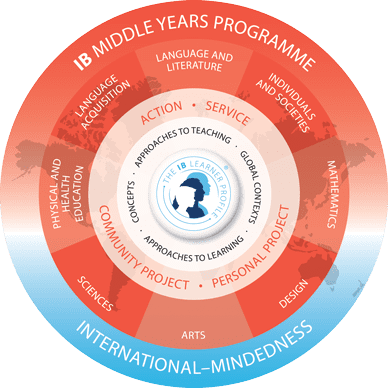
This enriched approach ensures the Ontario Ministry science curriculum is covered thoroughly while creating room to develop the four branches of the MYP sciences framework at a more advanced level than MYP Year 4:
The first branch, Knowing and Understanding, involves applying core scientific concepts across biology, chemistry, and physics to increasingly complex problems in both familiar and unfamiliar contexts. The second branch, Inquiring and Designing, requires students to independently formulate research questions, develop detailed hypotheses, and design controlled experiments with carefully considered variables and methodology. The third branch, Processing and Evaluating, focuses on rigorous data collection, organization, and interpretation, alongside thorough identification of experimental limitations and evaluation of the reliability of results. The fourth branch, Reflecting on the Impacts of Science, challenges students to examine how scientific applications intersect with ethical, social, economic, and environmental considerations at a more nuanced level than in Year 4.
Grade 10 IB Science Curriculum Breakdown
Grade 10 Pre IB Science covers four content strands delivered through the Ontario SNC2D curriculum with MYP Year 5 enrichment. Biology explores the diversity of living things, animal and plant tissues, genetic continuity, and the mechanisms of evolution and natural selection. Chemistry covers chemical reactions in greater depth, including rates of reaction, acids and bases, and the behaviour of ionic and molecular compounds. Physics examines light and optics, including the properties of waves, reflection, refraction, and the behaviour of lenses and mirrors. Climate Change and Environmental Science investigates the mechanisms of climate change, human impacts on ecosystems, and the scientific basis for understanding environmental sustainability.
Across all four strands, students continue developing scientific inquiry skills assessed through the MYP criterion referenced framework, with greater expectations around experimental design, data analysis, and the quality of written scientific communication than in Grade 9 IB Science. Students who also want to strengthen their mathematical foundation alongside their science work can explore our Grade 10 IB Math Tutoring for coordinated MYP Year 5 support.
Understanding the IB MYP 1 to 8 Assessment Criteria in Grade 10 Science
The assessment methodology in MYP Year 5 follows the same four criterion framework as Year 4, but the performance expectations at each achievement level are higher. Work is evaluated across four equally weighted criteria, each scored on a rubric with achievement levels from 1 to 8.
Criterion A, Knowing and Understanding, assesses a student’s ability to recall and apply scientific knowledge to solve problems, including complex scenarios in unfamiliar formats that require integration of concepts across units.
Support Focus: Helping students connect biological, chemical, and physical concepts when questions require cross-topic thinking or are presented in novel application based contexts.
Criterion B, Inquiring and Designing, evaluates a student’s capacity to independently develop scientific questions, formulate precise hypotheses, and design rigorous experimental procedures with clearly justified methodology.
Support Focus: Walking students through the full structure of a scientific inquiry, from crafting a focused research question to anticipating experimental limitations before data collection begins.
Criterion C, Processing and Evaluating, examines how students collect, represent, and interpret data, identify sources of error, and evaluate the extent to which their results support their hypothesis and research question.
Support Focus: Reviewing lab reports for analytical depth, appropriate data representation, and the strength and honesty of evaluative commentary.
Criterion D, Reflecting on the Impacts of Science, requires students to consider the broader implications of scientific work and articulate how science and technology connect to real world ethical and societal questions.
Support Focus: Teaching students to move beyond surface level responses and construct nuanced, evidence informed reflections on scientific impact.
The Role of Supplemental Support
MYP Year 5 is the last opportunity for students to consolidate the scientific foundations they will carry into the IB Diploma Programme. The concepts and inquiry skills developed in Grade 10 underpin HL and SL Biology, Chemistry, and Physics in Grades 11 and 12. Students who enter the Diploma Programme with gaps in their MYP science foundation tend to find senior IB science significantly more difficult than it needs to be. The mathematical skills running alongside science at this level are equally important, and students stretched across both subjects often benefit from coordinated support in Grade 10 IB Science and Grade 10 IB Math at the same time. While a tutor can clarify difficult concepts, strengthen lab report writing, and improve criterion based performance, sustained success in the IB science pathway ultimately depends on the student’s own study habits, independent practice, and consistent engagement between sessions. You can also explore our Past Test Bank for additional practice materials to supplement your sessions.
Our Grade 10 IB Science Tutoring: Personalized Support for Ontario Students
For students adjusting to the increased demands of MYP Year 5 at IB World Schools across York Region and Ontario, the jump in expectations from Grade 9 IB Science can be significant. Supplemental tutoring for Grade 10 IB Science provides targeted feedback on lab reports and assignments, clarifies challenging classroom concepts, and prepares students to enter the IB Diploma Programme with the scientific reasoning skills and criterion based assessment experience they need to succeed.
Contact York Region Tutoring today to learn more about our academic support for the Grade 10 IB Science curriculum and how students can build the skills needed for senior IB Biology, IB Chemistry, and IB Physics.
Grade 10 IB Science Curriculum Breakdown
Students examine the classification of organisms across the major kingdoms of life, exploring the structural and functional characteristics that distinguish different species and investigating how biodiversity supports ecosystem stability and resilience.
Students investigate how traits are passed from one generation to the next through the mechanisms of cell division, DNA replication, and Mendelian inheritance, developing an understanding of how genetic variation arises and why it matters.
Students build on their Grade 9 chemistry foundation by exploring reaction types in greater depth, learning to balance chemical equations, predict products, and analyze the conditions that influence whether and how quickly reactions occur.
Students examine the properties and behaviour of acids and bases using the pH scale, investigate neutralization reactions, and explore how these chemical principles apply in biological systems, industrial processes, and everyday contexts.
Students investigate the behaviour of light as a wave, covering reflection, refraction, total internal reflection, and the optical properties of lenses and mirrors, with applications to technology and the human eye.
Students explore the scientific mechanisms driving climate change, including the greenhouse effect, carbon cycling, and the impact of human activity on global systems, and evaluate evidence-based approaches to environmental sustainability.
York Region Tutoring Provides
If a student is approaching a forthcoming test, we can provide them with a previous test to be completed at home before their upcoming session. Subsequently, during their next class, just before the exam, they can review the test with their tutor. These tests are exclusively sourced from high schools in York Region and other areas in Ontario, serving as the definitive benchmark for students to assess their readiness.
York Region Tutors and are equipped with drawing tablets making collaboration simple, efficient and effective. We also offer drawing tablets at a discount for purchase to students who really take to the functionality of the product.
At the parents’ request, following each tutoring session, our tutors can assign homework tailored to address weaknesses and reinforce strengths in students. Additionally, we incorporate homework questions directly extracted from previous tests and quizzes administered by YRDSB school teachers, allowing students to familiarize themselves with potential test questions.